Vitamin Enriched Casting Blog
Vitamin Enriched Casting Blog

September 27, 2026 • Actor Casting • Blog Post
Self-tape auditions have become a major part of the casting process. Whether you’re a professional actor or auditioning for your very first commercial, knowing how to create a great self-tape can make a big difference.
At Vitamin Enriched, we’ve been casting commercials and real people since 2004, and we’ve watched more auditions than we can count. We’ve seen fantastic performances filmed on phones and beautifully produced tapes that completely miss the mark.
Here’s the thing: A great self-tape isn’t about having expensive equipment. It’s about giving a great performance and making it easy for casting directors to see what you can do.
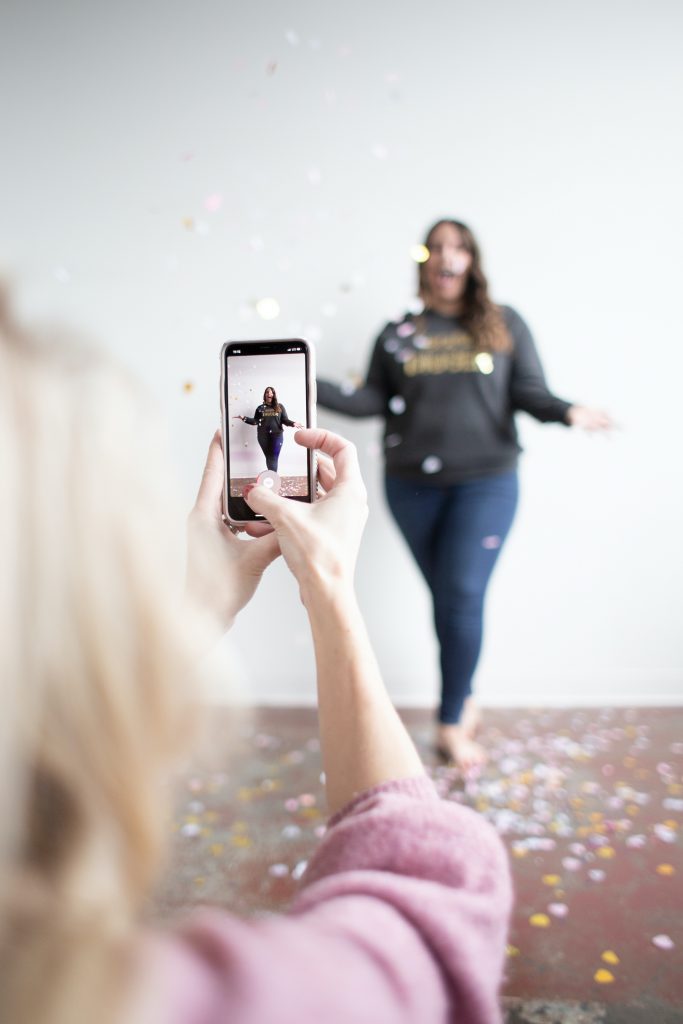
Here are our tips for creating a self-tape audition that stands out for the right reasons.
This might sound obvious, but you’d be surprised how often actors overlook important details in self-tape instructions.
Every casting project is different. We may ask for specific framing, a slate, particular wardrobe, or multiple takes of a scene.
If we ask for two takes, send two takes. If we ask you to film horizontally, don’t send a vertical video.
Following directions shows us that you’re professional and can take direction, which is an important part of working on set.
Our advice: Before you hit record, take a few minutes to review everything we’ve asked for.
You don’t need a professional camera or elaborate lighting setup to create a strong self-tape.
A smartphone with a decent camera can work perfectly well.
What matters is that we can clearly see your face.
Film in a well-lit room with soft, even lighting. Natural light from a window can be great, as long as the window is in front of you rather than behind you.
Avoid harsh overhead lighting, dark rooms, or sitting in front of a bright window that turns you into a silhouette.
If we can’t see your expressions, we’re missing an important part of your performance.
Your self-tape should be about you, not what’s happening behind you.
A plain wall or simple, uncluttered background works best. Neutral colors are usually a safe choice.
Avoid busy patterns, distracting artwork, open closets, or anything else that pulls attention away from your performance.
You don’t need to buy a professional backdrop, but your space should look clean and intentional.
The goal is to make you the focus of the audition.
Great lighting won’t help if we can’t understand what you’re saying.
Choose a quiet room and turn off anything that creates background noise, including televisions, music, fans, and notifications.
If you’re using your phone, do a quick sound test before recording.
You don’t necessarily need an external microphone, but we should be able to hear every word clearly.
And if someone is reading opposite you, make sure their voice isn’t overpowering yours.
Unless the casting instructions say otherwise, film horizontally and position your camera at eye level.
For most commercial auditions, a medium close-up that shows your head and upper body works well.
We want to see your facial expressions and enough of your body language to understand your performance.
Avoid filming from below, placing the camera too far away, or leaving excessive empty space above your head.
If the scene requires movement or physical action, adjust your framing so we can see what you’re doing.
And please, don’t hold your phone while filming. Prop it up or use a tripod so the image stays steady.
Preparation is important, but there’s a difference between knowing your material and delivering a performance that feels overly practiced.
We want actors who understand the scene and can make interesting choices.
Learn your lines well enough that you’re not constantly searching for the next word.
Then focus on the intention behind what you’re saying.
What does your character want? Who are you talking to? What’s happening in the moment?
Don’t simply recite the dialogue.
The best performances feel like we’re watching a real moment unfold, not someone demonstrating how well they’ve memorized a script.
This is a big one for us at Vitamin Enriched.
We love authentic performances.
We’re often looking for actors who feel like real people rather than performers who are obviously acting.
That doesn’t mean every role should be understated. Comedy, heightened characters, and larger performances absolutely have their place.
But your choices should feel grounded in the scene and appropriate for the tone of the commercial.
Sometimes doing less is more effective than doing more.
A subtle reaction, a genuine smile, or a well-timed pause can be more compelling than an exaggerated performance.
Don’t try to show us every acting trick you have. Show us that you understand the material.
If your scene involves dialogue, have someone read the other character’s lines whenever possible.
A good reader can help you stay connected to the scene and react naturally.
Your reader doesn’t need to be an actor, but they should read clearly and avoid overpowering your performance.
Position them close to the camera so your eyeline feels natural, while still allowing us to see your face.
Avoid looking directly into the lens unless the scene calls for it or the casting instructions specifically request it.
And remember, acting isn’t just about delivering lines. It’s also about listening and reacting.
One of the biggest mistakes we see in self-tape auditions is poor eyeline.
Your eyeline is where you’re looking during a scene, and it has a huge impact on how your performance translates on camera.
Unless you’re specifically instructed to speak directly to the camera, you should generally be looking just off-camera, where your scene partner would naturally be.
Keep your reader close to the camera, but not directly behind it. We want to see your face and your expressions while still believing you’re having a conversation with another person.
If your reader is too far to the side, we end up watching your profile instead of your performance. If you’re constantly looking down at your script, we lose your expressions and your connection to the scene.
And if you’re looking directly into the lens when the scene doesn’t call for it, it can feel like you’re talking to the audience rather than another character.
If you’re speaking to more than one person in a scene, establish clear, consistent eyelines for each character. You don’t need to dramatically turn your head every time someone speaks. Small adjustments in where you’re looking are usually enough.
Our advice: Your eyeline should help us believe the scene is happening, not remind us that we’re watching an audition.
This might be one of the most important pieces of advice we can give actors.
Your audition doesn’t stop when you stop speaking.
We see plenty of self-tapes where actors deliver their lines beautifully, but the moment their reader starts speaking, they seem to check out. They’re waiting for their next cue rather than actually participating in the conversation.
And we can see it.
Great acting isn’t just about how you deliver dialogue. It’s about how you listen, react, process information, and respond to the person you’re speaking with.
Think about how conversations happen in real life. You don’t simply wait for someone to finish talking so you can deliver your next sentence. You’re constantly reacting to what they’re saying.
Maybe something surprises you. Maybe you’re skeptical. Maybe you’re amused, annoyed, confused, or trying not to laugh.
Those reactions are part of the performance.
The moments between your lines can be just as important as the lines themselves.
We want to see you actively listening to your reader. We want to see thoughts happening, emotions shifting, and genuine reactions to what’s being said.
Don’t decide in advance that you’re going to smile at a particular moment or raise an eyebrow after a certain line. Really listen to what your reader is saying and allow yourself to respond naturally.
And don’t feel like you have to fill every silence with an exaggerated facial expression. Sometimes the smallest reaction is the most compelling.
At Vitamin Enriched, we’re particularly drawn to actors who can make a scripted scene feel like a real conversation.
That means being fully present, even when you’re not the one talking.
Don’t just wait for your next line. Live in the moments between them.
Your reader plays an important role in helping you deliver a natural performance.
Whenever possible, choose someone who can engage with you rather than simply reading the lines in a flat, disconnected way.
They don’t need to be a professional actor, and they certainly shouldn’t try to steal the scene. But they should give you something genuine to respond to.
Position them near the camera, make sure you can hear them clearly, and encourage them to read at a natural conversational pace.
A great self-tape should feel like two people having a real interaction, even though we only see one of them.
And remember, the camera is capturing everything you do, not just the moments when you’re speaking.
Sometimes it’s your reaction to someone else’s line that makes us want to cast you.
One of the advantages of self-taping is that you have time to explore the material before submitting it.
Use that opportunity to make thoughtful choices.
We don’t necessarily want to see the most obvious interpretation of a scene.
Think about what makes your character interesting. Consider the relationships, humor, and emotional beats in the material.
If the instructions allow multiple takes, you might try one that stays close to your initial interpretation and another that explores a different approach.
But don’t make choices simply to be different.
The best choices are the ones that feel truthful to the character and the story.
Unless we’ve specifically requested something, you don’t need to turn your self-tape into a miniature film production.
We don’t need elaborate sets, special effects, dramatic lighting, or professional editing.
A simple wardrobe choice that suggests the character is usually enough.
Avoid costumes or props that distract from your performance.
We’re casting you, not judging your filmmaking abilities.
And please don’t add music, graphics, filters, or unnecessary editing unless the casting instructions ask for them.
Keep it simple. Let your performance do the work.
We understand the temptation to keep recording until you get the perfect performance.
But perfection isn’t always what makes an audition interesting.
At some point, too many takes can make a performance feel mechanical or overly rehearsed.
Give yourself time to prepare, record a few strong options, and choose the take that feels the most truthful and engaging.
If we’ve requested multiple takes, follow those instructions.
Otherwise, send your strongest work.
If we’ve requested a slate, make sure you include it.
A slate is a brief introduction where you may be asked to state your name, location, height, availability, or other information relevant to the project.
Keep it simple, friendly, and natural.
Don’t turn your slate into a performance unless we’ve specifically asked you to show some personality.
And don’t add information we haven’t requested.
If we ask for a full-body shot as part of your self-tape audition, please don’t overthink it!
We don’t need you to set up your camera and shoot a brand-new full-body video every single time you audition.
If you have a clear, recent full-body shot from last week, send us that!
As long as it accurately reflects what you currently look like, it’s perfectly fine to reuse it, unless we’ve specifically requested something new.
We’re not judging your full-body shot for its production value. We simply need to see what you look like from head to toe.
Make sure you’re fully visible, the lighting is decent, and you’re wearing something that allows us to see your general build.
That’s it!
We know self-taping takes time, and we’d much rather you spend that time preparing your performance than stressing over shooting another full-body video.
Save yourself some time. Keep a recent full-body shot on your phone or computer so it’s ready whenever you need it.
Before you send your audition, watch the entire video from beginning to end.
Make sure the audio works, the picture is clear, and the file includes everything we’ve requested.
Check that you haven’t accidentally cut off the beginning or end of a scene.
Also, pay attention to file naming and upload instructions.
Casting teams may be reviewing hundreds of auditions, and properly labeled files make everyone’s job easier.
A great performance won’t do much good if the file is missing, corrupted, or uploaded incorrectly.
Commercial casting often moves quickly.
Sometimes we’re working with extremely tight deadlines, and the director or agency may begin reviewing auditions as soon as submissions arrive.
If you can submit early, great.
If you need an extension, ask as soon as possible rather than waiting until the deadline has passed.
And if you can no longer participate, let your agent or the casting team know.
Being reliable and professional matters.
This might be our most important tip.
Actors sometimes spend so much time trying to figure out what casting directors want that they lose what makes their own performance interesting.
Of course, you should understand the brief, follow the instructions, and respect the tone of the project.
But within those parameters, bring your own perspective to the role.
We want to see your instincts, your personality, and your interpretation of the material.
Directors hire casting directors for their taste and their eye for talent. We’re looking for performers who bring something compelling to the screen, not people who can perfectly imitate what they think we want.
Trust your preparation and make choices you believe in.
At Vitamin Enriched, we love actors who make us forget we’re watching an audition.
We’re drawn to authentic performances, interesting faces, distinctive personalities, and actors who can make scripted dialogue feel like a real conversation.
We pay attention to how you listen, how you react, and what happens in the moments when you’re not speaking.
Are you genuinely connecting with your scene partner? Are you processing what’s being said? Do we believe you’re experiencing the moment, or are you simply waiting to deliver your next line?
Those details matter.
A great performance isn’t always about delivering the perfect line. Sometimes it’s about a look, a pause, a subtle reaction, or a moment of genuine connection.
We don’t just want to hear you say the lines. We want to see you think, listen, react, and live in the scene.
That’s what makes a performance feel real. And that’s what makes a self-tape memorable.
Self-taping gives actors an opportunity to audition from almost anywhere, but it can also create pressure to make every detail perfect.
Don’t let that pressure get in the way of doing good work.
Prepare your material, create a simple setup, follow the instructions, and give yourself room to make interesting choices.
Remember, casting directors want to find great talent. We’re rooting for you to succeed.
And even if you don’t book a particular role, a strong audition can make an impression that lasts beyond one project.
At the end of the day, the best self-tape is one that allows us to see what makes you special.
Vitamin Enriched — Traditional Commercial Casting & Real People Casting Since 2004.